Global Sourcing Guide for Fish Soluble in Aquafeed Supply Chains
Introduction to Fish Soluble in Industrial Feed Supply Chains
Understanding Fish Soluble as a Marine Feed Ingredient
Fish soluble is a liquid or concentrated protein-rich derivative obtained from fish processing by-products, widely used in aquafeed and animal nutrition systems. It plays a critical role in converting marine biomass into high-value feed inputs.
According to the Food and Agriculture Organization (FAO), the utilization of marine by-products in feed production is a key strategy for improving sustainability in global fisheries and reducing waste. Fish soluble fits directly into this circular economy model.
In industrial supply chains, fish soluble is typically processed into hydrolysates or soluble protein concentrates that enhance feed palatability and digestibility. This makes it a valuable ingredient for feed manufacturers operating in high-performance aquaculture sectors.
Position in the Global Feed Ingredient Ecosystem
Within the broader feed ingredient ecosystem, fish soluble is positioned as a functional protein enhancer rather than a primary feed base. It complements fishmeal, plant proteins, and synthetic amino acids.
Industry data from the International Fishmeal and Fish Oil Organisation (IFFO) highlights increasing demand for alternative marine proteins due to fishmeal supply volatility. Fish soluble benefits from this shift.
Its integration into feed formulations reflects growing interest in maximizing nutrient efficiency while maintaining cost-effective protein inclusion strategies in aquaculture production systems.
Composition and Functional Role in Aquafeed Nutrition Systems
Fish soluble typically contains water-soluble proteins, peptides, amino acids, and trace marine nutrients derived from enzymatic or thermal processing. These components support rapid nutrient absorption in aquatic species.
Based on research published in Aquaculture Nutrition journals, protein hydrolysates significantly improve feed intake and growth performance in shrimp and fish species when used as supplement ingredients.
The functional profile of fish soluble also includes natural attractants that stimulate feeding behavior, which is particularly important in intensive aquaculture systems.
Digestibility and Feed Performance Enhancement
One of the key advantages of fish soluble is its high digestibility compared to conventional protein meals. This improves feed conversion ratios (FCR) in aquaculture operations.
According to technical studies from marine nutrition research institutions, soluble marine proteins enhance gut health and enzymatic activity in juvenile fish.
As a result, feed formulators often integrate fish soluble into starter feeds and high-growth formulations where nutritional efficiency is a priority.
Key Industrial Applications Across Aquaculture and Livestock Feed
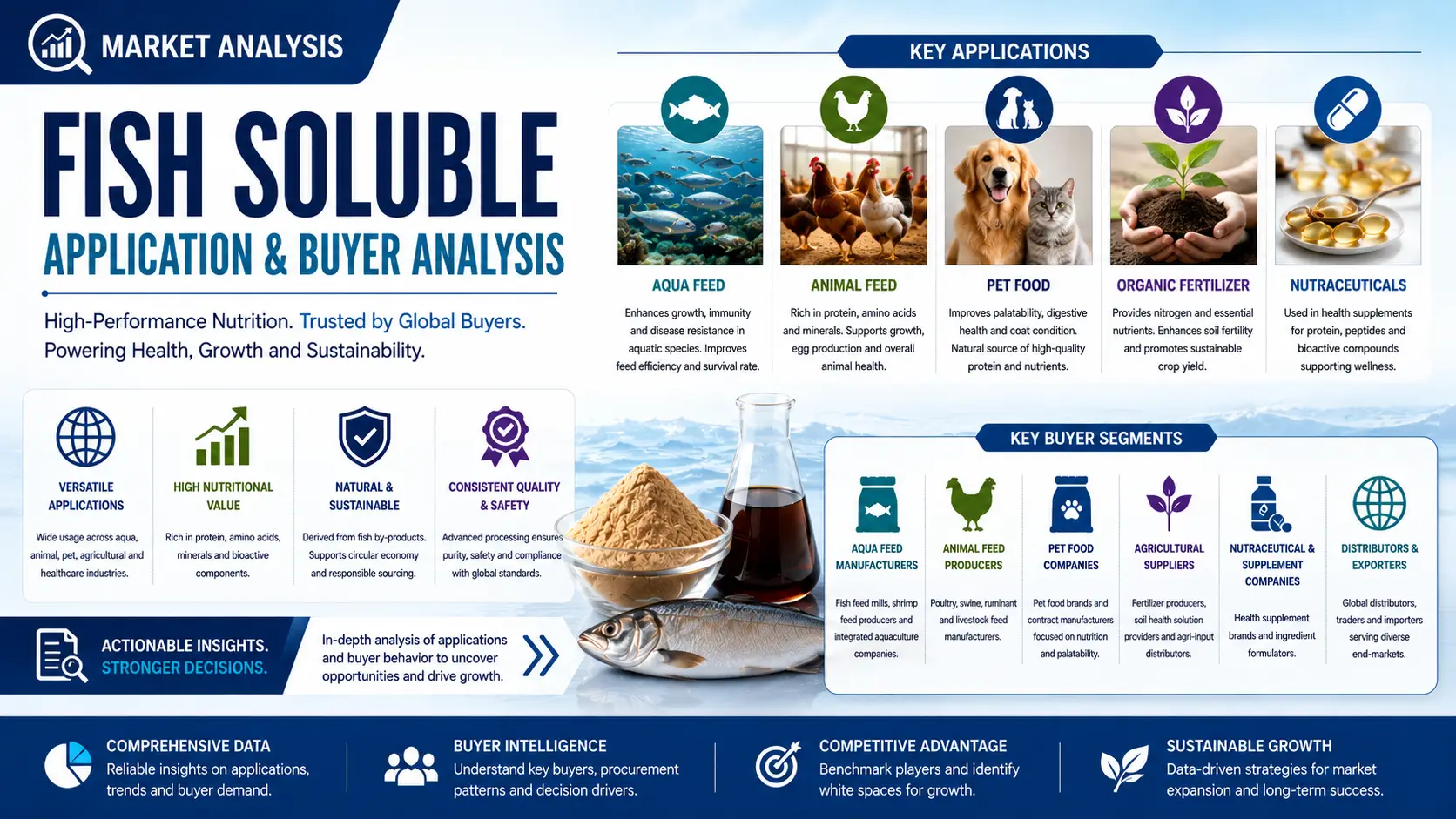
Fish soluble is primarily used in aquaculture feed production, especially for shrimp, salmon, tilapia, and marine fish species. It acts as a palatability enhancer and protein booster.
Reports from global aquaculture development programs indicate that feed intake stimulation is a critical factor in optimizing farm productivity, making soluble marine proteins increasingly relevant.
Its inclusion supports both larval and grow-out feed stages, where nutrient uptake efficiency directly impacts survival rates and growth performance.
Livestock and Specialty Feed Applications
Beyond aquaculture, fish soluble is also used in livestock feed formulations as a supplemental protein source. It is particularly relevant in high-value poultry and swine nutrition systems.
Industry publications from feed manufacturing associations highlight growing interest in marine-derived proteins for improving amino acid balance in livestock diets.
Additionally, fish soluble is sometimes applied in pet food manufacturing due to its flavor-enhancing properties and digestibility benefits.
Global Market Trends and Demand Drivers for Fish Soluble
The global feed industry is increasingly shifting toward sustainable and circular sourcing models. Fish soluble benefits from this transition as a by-product-based ingredient.
Market insights from OECD-FAO agricultural outlook reports show increasing pressure on conventional fishmeal supplies, encouraging alternative marine protein adoption.
This trend supports long-term demand growth for fish soluble in aquafeed manufacturing regions such as Asia-Pacific and Latin America.
Supply Volatility and Value Chain Optimization
Fish processing industry volatility directly affects the availability of fish soluble, making supply chain optimization a critical issue for buyers.
According to seafood market analysis reports, fluctuations in fish catch volumes influence by-product availability and pricing stability in marine ingredient markets.
As a result, procurement teams are increasingly focusing on diversified sourcing strategies to secure consistent fish soluble supply.
B2B Buyer Landscape and Procurement Considerations
Fish soluble is primarily purchased by aquafeed manufacturers, compound feed producers, animal nutrition companies, and ingredient distributors. These buyers operate at industrial scale.
Procurement teams in these organizations focus on securing consistent quality and volume to maintain production stability in feed manufacturing lines.
Traders and bulk ingredient distributors also play a key role in bridging supply between processing plants and feed producers.
Procurement Criteria and Supplier Evaluation
Buyers typically evaluate fish soluble based on protein concentration, moisture content, microbial safety, and sourcing transparency.
Industry procurement standards often require compliance with feed safety regulations and traceability frameworks outlined by regional authorities such as the European Feed Manufacturers’ Federation (FEFAC).
Cost efficiency, supply reliability, and logistics capabilities are also key decision factors in supplier selection.
Supply Chain, Sourcing Strategy, and Quality Parameters
Fish soluble is produced through fish processing facilities where by-products are converted into soluble protein fractions. These are then transported to feed manufacturers or intermediaries.
According to seafood processing industry studies, integrated supply chains help reduce waste while improving the commercial value of marine resources.
Efficient logistics and cold-chain handling are essential to maintaining product stability and quality during distribution.
Strategic Sourcing Considerations for Buyers
B2B buyers often adopt multi-sourcing strategies to mitigate supply risks associated with seasonal fish availability.
Industry procurement research indicates that long-term supplier agreements improve cost stability and reduce exposure to raw material price volatility.
Quality assurance programs and third-party certifications are increasingly used to validate supplier reliability in global feed ingredient markets.
Conclusion: Strategic Value of Fish Soluble in Feed Manufacturing
Fish soluble continues to gain importance as a functional marine ingredient in modern aquafeed and livestock nutrition systems.
Its role in improving feed efficiency, enhancing palatability, and supporting sustainable ingredient sourcing makes it a valuable component in global feed supply chains.
For B2B buyers, understanding sourcing dynamics and supplier capabilities is essential to securing consistent quality and long-term supply stability.
Sources
https://www.fao.org/fishery/en
https://www.iffo.com/
https://www.oecd.org/agriculture/oecd-fao-agricultural-outlook/

Leave a Comment