Understanding Wheat Bran and Its Commercial Value
Wheat bran is the outer layer of the wheat kernel that is separated during the flour milling process. Although traditionally viewed as a milling by-product, it has become an important commercial commodity due to its nutritional composition and versatile industrial applications.
Nutritional and Functional Characteristics
Wheat bran contains dietary fiber, protein, minerals, and bioactive compounds that make it valuable for both feed and food applications. According to the Food and Agriculture Organization (FAO), agricultural by-products such as wheat bran contribute significantly to resource efficiency and sustainable food systems.
The product is widely traded across agricultural commodity markets because it offers cost-effective nutritional benefits compared to many alternative ingredients. Its availability is closely linked to global wheat production and flour milling activities.
Growing awareness of sustainable ingredient utilization has further increased interest in wheat bran among manufacturers seeking to improve product value while reducing waste streams.
As a result, wheat bran has evolved from a secondary milling output into a commercially significant ingredient across multiple industries.
Key Industrial Applications Driving Demand
The expanding use of wheat bran across feed and food sectors continues to support steady market demand worldwide. Its nutritional profile and affordability make it attractive to a broad range of industrial users.
Animal Feed and Livestock Nutrition
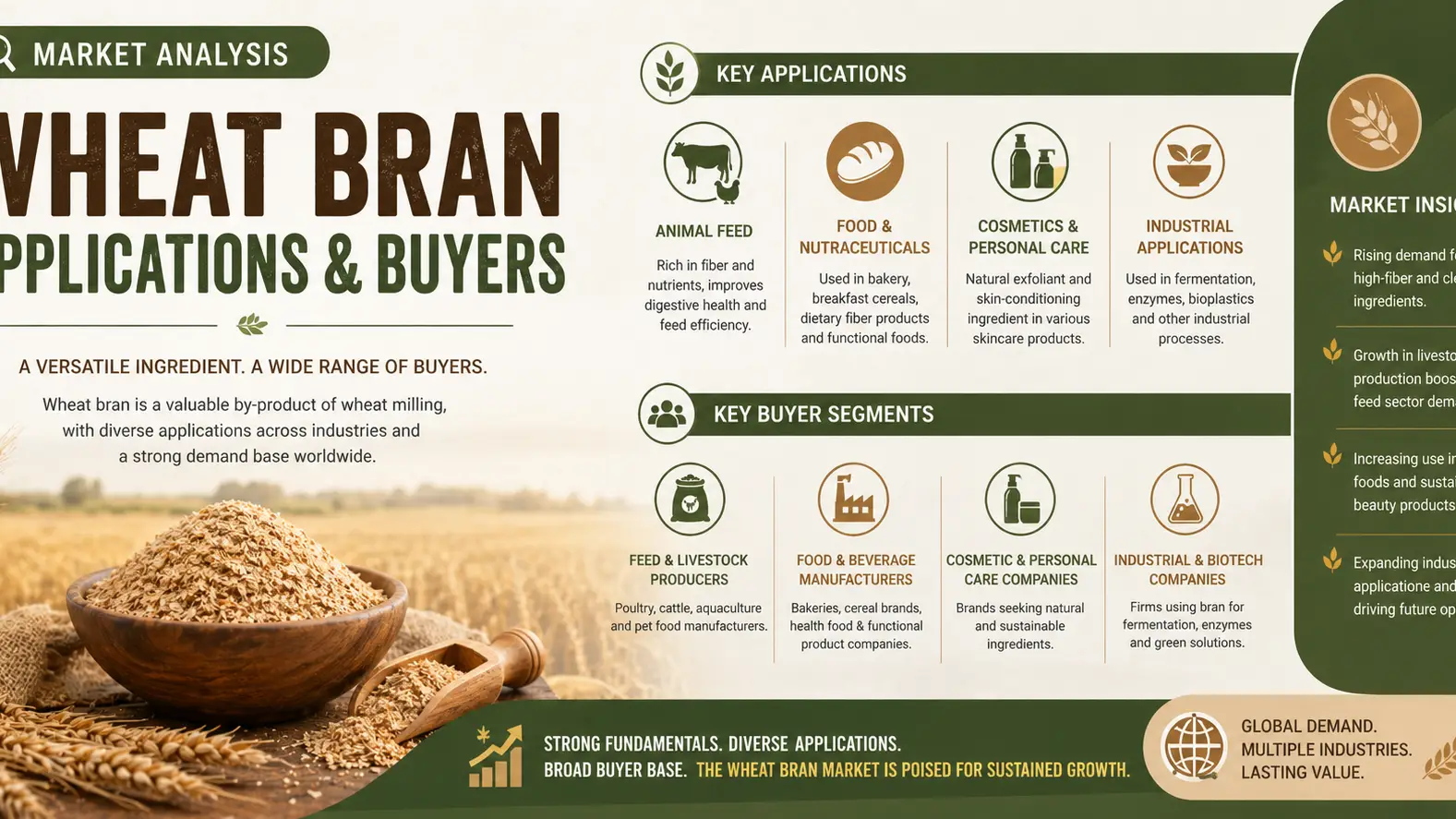
Animal feed remains the largest application segment for wheat bran. According to technical information published by the United States Department of Agriculture (USDA), wheat bran is commonly incorporated into feed formulations for cattle, poultry, swine, and other livestock due to its fiber and nutrient content.
Feed manufacturers often utilize wheat bran to optimize feed costs while maintaining nutritional quality. Its digestibility characteristics can support animal health and production efficiency when incorporated into balanced diets.
Food Processing Applications
In the food industry, wheat bran is increasingly used in bakery products, cereals, nutritional supplements, and functional foods. Research published by scientific journals such as Foods and Frontiers in Nutrition highlights growing consumer demand for fiber-enriched products.
Manufacturers continue to explore wheat bran as a value-added ingredient that supports product differentiation while aligning with health-conscious consumer preferences.
Global Market Trends and Growth Drivers
Several macroeconomic and industry trends are influencing wheat bran demand across international markets. These factors create opportunities for producers, traders, and procurement professionals.
Rising Demand for Sustainable Ingredients
According to market analyses from organizations monitoring agricultural commodities, sustainability initiatives are encouraging greater utilization of agricultural co-products such as wheat bran. Companies increasingly seek ingredients that support circular economy objectives and reduce waste.
The feed sector continues to benefit from population growth and increasing protein consumption worldwide. This trend contributes to sustained demand for livestock feed ingredients, including wheat bran.
The food industry is simultaneously experiencing rising interest in fiber-rich formulations, particularly within bakery and health-focused product categories.
These developments position wheat bran as a commercially relevant ingredient capable of serving multiple growth markets simultaneously.
Major Buyer Groups and Procurement Requirements
Understanding buyer behavior is critical for suppliers and traders seeking to expand their wheat bran business. Different industries evaluate suppliers using distinct purchasing criteria.
Who Buys Wheat Bran?
Primary buyers include animal feed manufacturers, livestock producers, feed premix companies, flour processors, food ingredient distributors, bakery manufacturers, cereal producers, and nutritional product companies. According to industry reports from grain processing associations, these sectors account for the majority of commercial wheat bran consumption.
Procurement teams typically assess factors such as nutritional specifications, moisture content, consistency, supply reliability, origin, and compliance with applicable quality standards.
Buyers often compare multiple suppliers to reduce sourcing risks and secure competitive pricing structures. Long-term supply stability is especially important for manufacturers operating large-scale production facilities.
Product pages on B2B marketplaces support sourcing decisions by providing specification details, supply availability, logistics information, and supplier credentials that facilitate procurement evaluation.
Sourcing Considerations for B2B Buyers
Effective sourcing strategies help buyers manage costs while ensuring product quality and supply continuity. Wheat bran procurement involves several considerations beyond basic pricing.
Evaluating Suppliers and Supply Chains
According to guidance from international grain trade organizations, buyers should assess supplier production capacity, quality management systems, export capabilities, and documentation standards before entering commercial agreements.
Supply chain transparency has become increasingly important as companies seek greater visibility into ingredient origins and manufacturing practices. Reliable suppliers are expected to provide consistent quality across multiple shipments.
Logistics efficiency also plays a significant role in sourcing decisions. Transportation costs, storage conditions, and delivery reliability can significantly impact total procurement expenses.
For international buyers, working with established suppliers and B2B marketplaces can improve sourcing efficiency while reducing operational risks associated with cross-border trade.
Future Opportunities in the Wheat Bran Market
The long-term outlook for wheat bran remains positive as new applications and market demands continue to emerge. Innovation is expected to further enhance its commercial value.
Emerging Growth Areas
Research published by nutrition and food science institutions indicates growing interest in wheat bran for functional foods, dietary fiber enrichment, and specialty nutritional formulations. These developments may create additional demand beyond traditional feed applications.
Advances in food processing technologies are enabling manufacturers to improve the functionality and consumer acceptance of wheat bran-containing products. This trend supports greater utilization across premium food categories.
Feed producers are also exploring opportunities to optimize livestock nutrition through improved ingredient combinations and formulation strategies. Wheat bran remains a cost-effective component within many feed systems.
As sustainability, nutrition, and resource efficiency become increasingly important business priorities, wheat bran is expected to maintain a strong position within global agricultural supply chains.
Conclusion
Commercial Outlook for Buyers and Suppliers
Wheat bran continues to demonstrate strong commercial relevance across feed, food, and agricultural industries. Its combination of nutritional value, affordability, and wide availability supports demand from a diverse range of industrial buyers.
Market trends related to sustainability, livestock production growth, and functional food development are creating new opportunities throughout the value chain. These factors strengthen wheat bran's role as a strategic ingredient in both established and emerging applications.
For procurement teams, successful sourcing depends on evaluating quality specifications, supplier reliability, logistics capabilities, and long-term supply security. Careful supplier selection can help organizations optimize costs and operational performance.
As global industries continue to seek efficient and sustainable ingredients, wheat bran is expected to remain an important commodity for manufacturers, distributors, traders, and sourcing professionals worldwide.
Sources
https://www.fao.org
https://www.usda.gov
https://www.frontiersin.org

Leave a Comment